- Wiscampsin Weekly
- Posts
- Invasive lampreys, violent turkeys, and management plan input
Invasive lampreys, violent turkeys, and management plan input
Story of the week: Brief history on Wisconsin's glaciers

Forrest Koslowski
December 11, 2025
This Week’s Wiscampsin Weekly brought to you by:

Mornin’ to everyone who heard about Wisconsin DOT rolling out blackout and retro license plates. This is the Wiscampsin Weekly, the email that gets you in the know on the Wisconsin outdoors in 5 minutes or less. New reader? Subscribe here.
This week’s weekly:
🐍 Invasive sea lampreys making a comeback in Great Lakes
🦃 Eau Claire relocates turkeys after repeated attacks
👂 DNR seeks input on wild turkey management plan
🧊 STORY OF THE WEEK: A brief history on Wisconsin's glaciers

🐍 Invasive sea lampreys making a comeback in Great Lakes LINK
The infamous “vampire fish” that once wiped out 98% of Great Lakes trout is creeping back, thanks to funding cuts and early signs that lampreys may be developing resistance to the pesticide that once saved the fishery.
COVID-era gaps in stream treatments offered a grim preview of what happens when control lapses: in one tributary, lamprey numbers jumped tenfold in a single year, proving they’re just waiting for a chance to surge.
Scientists are racing to keep them in check with electric barriers, pheromone traps, necromones (yes, ground-up dead lampreys), and experimental tech — but proposed 79% cuts to key federal research could stall the entire effort.
🦃 Eau Claire relocates turkeys after repeated attacks LINK
Eau Claire’s rowdy toms have gone full trail-terror mode, chasing runners, ignoring “stand your ground” advice and even sending one unlucky local to the hospital for a tetanus booster.
Wildlife officials say the birds have gotten a little too comfortable with humans, with dominance-season bravado turning a riverside walking trail into an accidental boxing ring of feathered chest-thumpers.
The city and USDA are now planning a drop-net turkey extraction to relocate the combative crew to a quieter patch of woods — ideally one with fewer pedestrians to intimidate and fewer ankles to peck.
👂 DNR seeks input on wild turkey management plan LINK
Submit feedback by Dec. 18 to influence Wisconsin’s updated wild turkey management plan, which will guide hunting regulations and conservation strategies for the next decade.
Wild turkeys flourish statewide, now found in all 72 counties, thanks to a 1976 reintroduction from Missouri and decades of careful trap-and-transfer efforts.
2025 spring turkey harvest exceeded 50,000 birds, with a 22% hunter success rate and a satisfaction rating of 7.2/10, highlighting strong participation and support for Wisconsin’s lottery-based permit system.
SUPPORT THE WISCAMPSIN WEEKLY — Click on our sponsors or check out the Wiscampsin Shop!
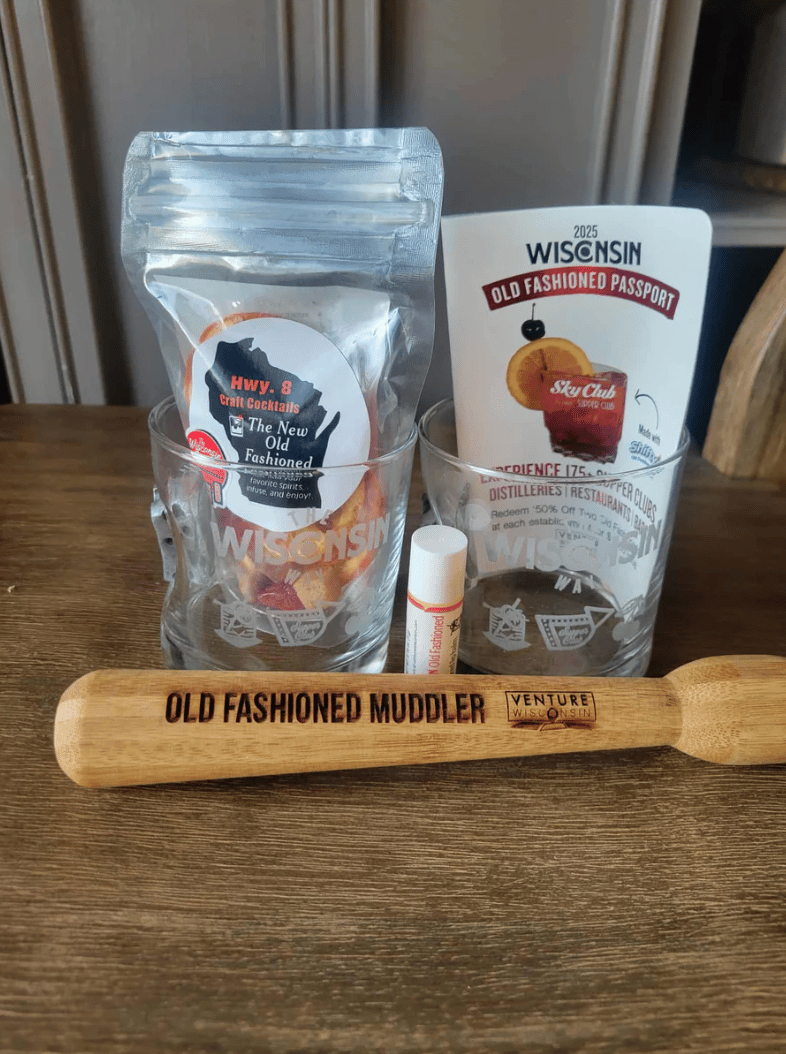
If you said “yes” or even “heck yea, I’m drinking one right now!” then boy oh boy, do we have something for you.
Venture Wisconsin’s Old Fashioned Bundle is the perfect gift for yourself, your neighbor, or anyone else on your list (just not your three-year-old niece).
Inside this groovy bundle you’ll find:
1. 2026 Old Fashioned Passport (discounts on Old Fashioneds at local hot spots all over the state)
2. ONE Wisconsin Way (metal cheese-head) cocktail glass (2 pictured)
3. Dehydrated Old Fashioned cocktail (fun, makes 2-4 cocktails)
4. Old Fashioned Flavored lip balm (60% cherry, 40% orange and a dash of real bitters)
🧊 STORY OF THE WEEK: A brief history on Wisconsin's glaciers
This week’s STORY OF THE WEEK is unlocked for everyone thanks to Venture Wisconsin - PLEASE SUPPORT THEM WITH A CLICK!
Long before snowshoes and snowmobiles, Wisconsin was a very different place—think vast sheets of ice, roaming mammoths, and the occasional bewildered human scratching their head at how cold it was. About 2.6 million years ago, the Ice Age arrived like an uninvited guest who never leaves (even after you say Welp, I s’pose).
For tens of thousands of years, glaciers advanced and retreated across the state, carving, scouring, and sculpting the landscape in ways that still make Wisconsin a hiker, skier, and paddler’s paradise today.
Glaciers are nature’s bulldozers: slow, relentless, and surprisingly efficient. As these massive rivers of ice crept southward, they scraped away bedrock, gouged valleys, and left behind everything from rolling hills to kettle lakes.
Picture hundreds of lakes dotting the landscape like spilled marbles—that’s not a coincidence. Many of Wisconsin’s lakes, including Lake Mendota and Lake Monona, are the handiwork of glaciers retreating and leaving behind depressions filled with meltwater.
The Ice Age didn’t just create lakes. Glacial debris, or till, blanketed the state, forming the fertile soils that make Wisconsin a Midwestern farming powerhouse. Moraines—those long, winding ridges of rock and soil—mark where glaciers paused, while drumlins—smooth, oval hills—tell the story of ice flowing over the land like taffy.
Even the Mississippi River owes part of its zig-zag path to glaciers, which redirected waterways and left behind valleys just begging to be explored by canoe or kayak.
For outdoor adventurers, this ancient frozen drama explains a lot. Hiking the Driftless Area, for example, feels like stepping outside of time—it’s one of the few parts of Wisconsin that glaciers skipped, leaving steep valleys, towering bluffs, and trout streams that feel untouched by Ice Age machinations.
The Ice Age Trail threads across more than 1,200 miles of Wisconsin, linking the state’s glacial landscapes into a continuous footpath for hikers, backpackers, and nature lovers who want to literally walk through the story of glaciers at their own pace.
And everywhere else, rolling forests, prairie remnants, and glacial lakes whisper tales of ice that shaped everything from the sand underfoot to the ridges you scramble over.
So next time you’re hiking, biking, or paddling across Wisconsin, tip your hat to the glaciers. Their slow, icy artistry created the state’s lakes, rivers, hills, and valleys we all love so dearly.
Without those colossal ice sheets, there’d be no paddling Lake Superior in the fall, no trekking the hills of the Northern Highlands, and no bluffs lining the Mississippi River out west.
Now send this email to a friend and get out ‘der!
WISCAMPSIN WEEKLY POLL
Wowee! Only 12% of poll voters got last week's trivia right. That must be a new record low!
The correct answer was B) Around 1850, according to most records, is when the last verified population of Woodland Caribou was extirpated from the state of Wisconsin.
While stray sightings occurred later (and failed reintroduction attempts happened in the Midwest in the 1930s), the breeding population of Woodland Caribou was largely gone from Wisconsin by the mid-19th century due to unregulated hunting and habitat change. However, their "ghosts" remain in place names—like Caribou Lake in Chippewa County!
This weeks trivia: Before modern refrigeration, Wisconsin was a global leader in the "Natural Ice" industry. Huge blocks of ice were harvested from Wisconsin lakes (like Lake Geneva and Lake Winnebago) and shipped as far as India.
What was the specific tool—patented in the 1800s—that allowed Wisconsin harvesters to cut perfectly square blocks for efficient shipping?Give it a gut check - click an answer below! |
Well, how'd we do this week? |
Reply