- Wiscampsin Weekly
- Posts
- Saving Wisconsin's seeds
Saving Wisconsin's seeds
Plus: Peregrine falcons, volunteer sturgeon guards, and carbon credits

Forrest Koslowski
March 05, 2026
Wiscampsin Weekly brought to you by:

Mornin’ to everyone wanting to apply to the elk hunting season on March 1. This is the Wiscampsin Weekly, the email that gets you in the know on the Wisconsin outdoors in 5 minutes or less. New reader? Subscribe here.
This week’s weekly:
🦅 Man rewarded for saving Wisconsin’s peregrine falcons
🛡️ Volunteer guards needed for sturgeon spawning season
💰 Bayfield county is raking in millions in carbon credits
🌱 STORY OF THE WEEK: Racing to save Wisconsin’s seeds
🦅 Godfather of Wisconsin’s peregrine falcons rewarded LINK
Greg Septon, the man basically responsible for bringing peregrine falcons back from the brink in Wisconsin, thought he was just attending a regular meeting. Instead, he was surprised with a lifetime achievement award that is frankly long overdue.
Back in the 80s, these birds were completely gone from the state. Greg stepped in, started the recovery program, and now we have over 40 nesting pairs producing fuzzy little chicks every year on top of power plants and skyscrapers.
Because he’s a legend, We Energies even named a permanent nesting site after him. It’s a huge win for a guy who spent decades climbing tall buildings just to make sure Wisconsin’s skies stayed a little more wild.
🛡️ Volunteer guards needed for sturgeon spawning season LINK
It’s almost time for the annual "Sturgeon Spectacular," where these prehistoric giants head to the shallow rocky banks of the Wolf River to spawn. But because they get so close to shore, they’re basically sitting ducks for poachers, which is why the DNR needs a small army of volunteers to keep watch.
The "Sturgeon Guard" is a tradition dating back to the 80s, and it’s arguably the most Wisconsin volunteer gig ever. You basically post up in a lawn chair along the river at spots like Bamboo Bend or the Shawano Dam to make sure nobody messes with the fish while they’re getting “cozy.”
The DNR is looking for folks to fill 12-hour shifts starting in mid-April. If you’ve got a good jacket, a thermos of coffee, and a desire to protect a species that’s been around since the dinosaurs, this is your chance to be a local hero (and get some prime fish-watching in).
💰 Bayfield county is raking in millions in carbon credits LINK
While the rest of the country is debating climate policies, Bayfield County is busy cashing checks. They just banked nearly $2.5 million by selling "carbon credits" for their county forest, essentially getting paid by big companies to just let their trees keep growing.
Seems like a pretty sweet deal for locals—the money is being used to keep property taxes down and fund local services. It turns out that preserving 170,000 acres of pristine Wisconsin woods isn't just good for the soul and the deer population; it’s also good for the checking account.
The county is still sustainably logging and keeping the trails open for public enjoyment.
Please give our sponsors a click!

Introducing the 2026 Coffee Passport from Venture Wisconsin—your ticket to explore 200 local coffee shops across Wisconsin.
How does it work? With every stop, enjoy 50% off two coffee or tea drinks. Use one discount today and one later (or treat a friend and use both in a single visit).
Road trip ready. Date-day approved. The perfect gift for the person who has everything.
Valid through December 31, 2026.
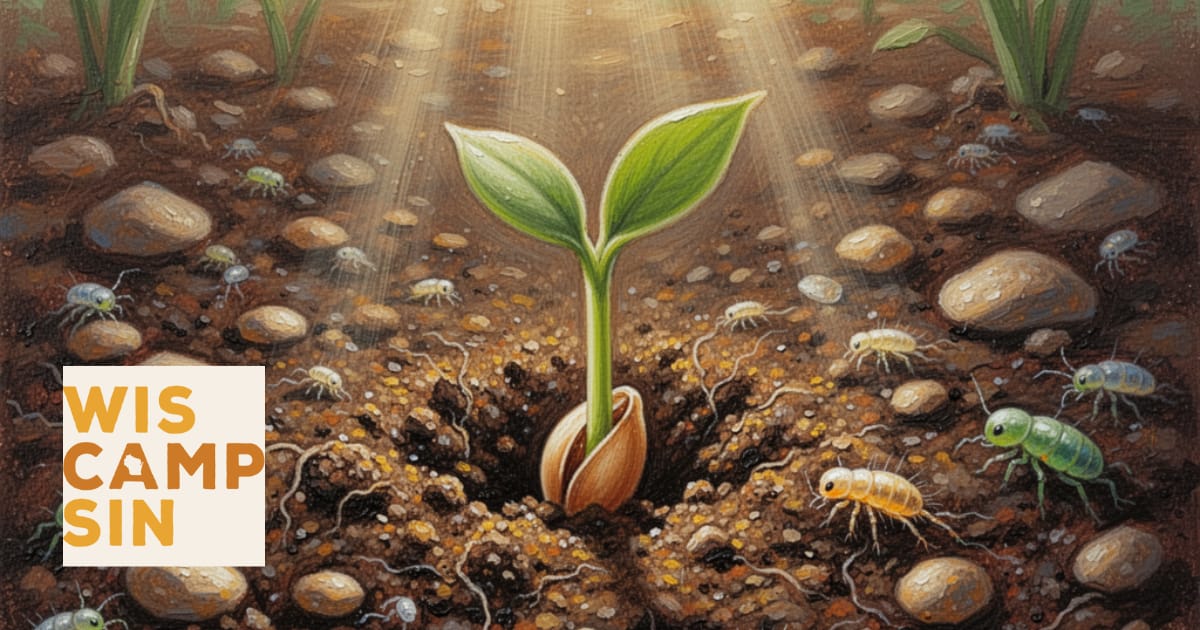
🌱 STORY OF THE WEEK: Racing to save Wisconsin’s seeds LINK
If you’ve ever tried to find a specific, heirloom tomato at the garden center only to find they’re sold out, you’ve felt a tiny fraction of the stress currently hitting Midwest conservationists. But instead of tomatoes, they’re looking for things like milkweed, pondweeds, and ancient prairie grasses—and the stakes are a whole lot higher than your summer salad.
Right now, there is a literal race against time happening across 11 states. It’s led by a group called the Midwest Native Seed Network, a coalition of 300 scientists, land managers, and growers who realized something alarming: our "seed bank" is running on empty. A massive survey recently revealed that 500 of our native plant species are effectively unavailable for restoration. As climate change makes wildfires and flooding more common, the demand for these seeds is skyrocketing, but the supply just isn't there.
“We’re addressing shortages that are hindering our ability to restore diverse habitats,” says Andrea Kramer of the Chicago Botanic Garden. It’s a classic bottleneck. Some seeds are just too expensive to produce at scale, while others are so "finicky" that researchers are still trying to figure out how to make them wake up and grow.
But there’s a real "best friend" energy to this solution. Rather than waiting for a magic federal fix, these folks are rolling up their sleeves and sharing their homework. They are compiling a regional "how-to" guide for the most difficult plants, connecting the people who need seeds with the growers who know how to produce them.
The dream is simple: twenty years from now, when a park manager in Wisconsin or a farmer in Illinois wants to bring back a piece of the original wild Midwest, they won't be told "sorry, we're out." They'll have a bag of seeds, a plan, and a whole network of neighbors who helped make it happen.
Now get out 'der.
WISCAMPSIN WEEKLY POLL
Last Week's Trivia Check
We asked which native Wisconsin fish is the only species to spawn in the dead of winter under the ice. This deep-water predator stumped a lot of you—only 34% guessed correctly, while 37% of you guessed the Lake Sturgeon!
The Correct Answer: Burbot (often called Eelpout or Lawyer).
The Takeaway: It is easy to see why so many guessed Sturgeon, since the spearing season happens on the ice in February. However, Sturgeon actually wait until mid-April to spawn in the rivers! The Burbot, on the other hand, thrives in the freezing dark. In late February and early March, they congregate on gravel humps under the ice to broadcast their eggs, forming massive, intertwined "mating balls" of dozens of fish.
This Week's Trivia
As the snowpack finally begins to recede in the damp woodlands and swamps, the very first sign of spring isn't a returning bird or a budding tree. It is a bizarre, primitive organism that refuses to wait for the soil to warm up, taking matters into its own hands to kick off the season.
Which native Wisconsin plant is capable of generating its own internal heat—reaching up to 70°F—to literally melt its way through the frozen ground and snow in early March?Give it a gut check and click a response below. |
MEME OF THE WEEK 😆

A review from the trail… On, Wisconsin!

Well, how'd we do this week? |
Reply